
This article is part of Qinsight’s cryptographic posture management use case series, connecting five security outcomes with practical operational workflows.
In brief
- After an appliance compromise, the keys the device stored, the remote keys it could invoke and the connections that trusted it can outlive the rebuilt device.
- Treat storage, use and trust as separate relationships, confirm current use with owners, and connect affected deployments to business services and recovery priorities.
- Keep suspected exposure distinct from confirmed compromise, and coordinate credential replacement with containment so new material is not issued into a compromised environment.
When a critical appliance vulnerability, including a zero-day, is being exploited, the first decisions concern containment, investigation and recovery of the affected device. Another question quickly follows: which keys, certificates and trusted connections could the attacker have reached?
A gateway may hold a private key, authenticate to another service, terminate encrypted traffic or use a remote signing service. Its cryptographic significance extends beyond its hostname and software version. Rebuilding the device addresses one part of the incident; the response also needs to account for credentials and trust that may outlive it.
For security leaders and architects, cryptographic impact analysis is the work of connecting the affected asset to those relationships. A maintained inventory can make that investigation more focused, provided the team distinguishes documented dependencies from evidence of actual compromise.
Start with the incident facts and the exposure window
The investigation begins with an affected asset identified by the incident response team, a vendor advisory or another security control. Record the device identity, software version, role, known indicators and relevant time window. If exploitation is suspected rather than confirmed, preserve that distinction.
The nature of the vulnerability matters. Arbitrary code execution, unauthorized file access and a flaw affecting one application function can expose different resources. The response team should use the advisory, forensic evidence and the device’s permissions to decide which access paths require investigation.
A historical example shows why this matters. In its January 2024 supplemental direction for affected Ivanti products, CISA required covered federal agencies to revoke and reissue connected or exposed certificates, keys and passwords as part of returning devices to service. The direction addressed a specific incident and population; it illustrates how recovery can extend beyond software remediation.
Cryptographic posture evidence supports that work by locating relevant objects and consumers. It does not independently establish the initial intrusion or determine everything an attacker did.
Follow storage, use and trust as separate relationships
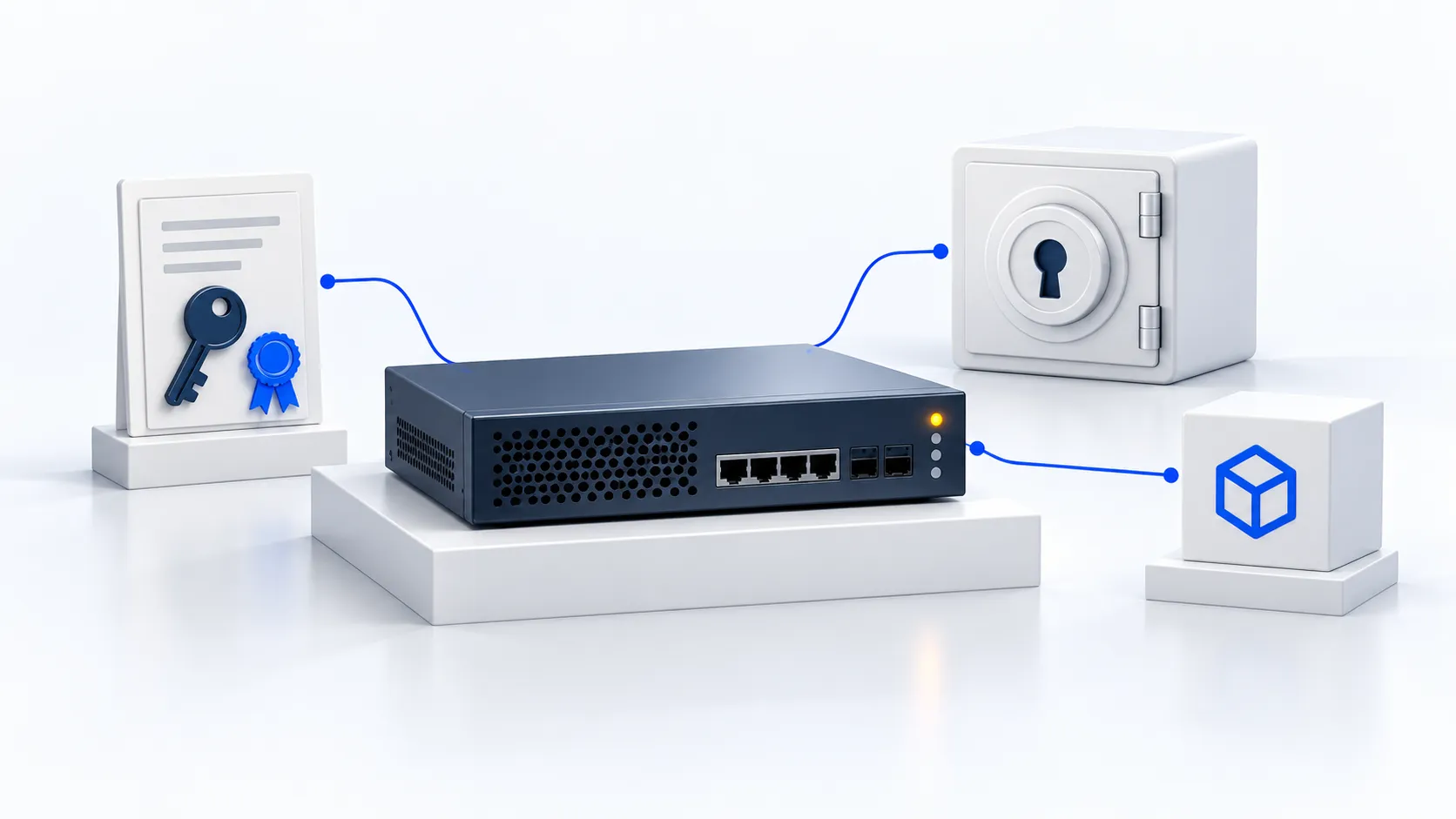
Consider an illustrative remote-access gateway. It stores a TLS private key, uses a client certificate for an internal connection and holds public certificates that identify trusted issuers. It may also have permission to call an external key-management service.
Each relationship has a different implication. A locally stored private key may require investigation for exposure. Permission to use a remote key may permit unauthorized operations even when the private material cannot be exported. A public trust certificate identifies a validation relationship; its presence is not evidence that the issuer’s private key was exposed.
| Relationship | Question for investigators | Evidence to seek |
|---|---|---|
| Private material stored on the device | Could the attacker read or extract it? | Storage protection, access paths and forensic findings. |
| Device authorized to use a remote key | Could the attacker invoke signing or decryption? | Permissions, identity records and service audit logs. |
| Same public-key identity observed elsewhere | Which other deployments may use the corresponding key? | Certificate associations and confirmed deployment records. |
| Device trusts another issuer or service | Which authentication paths need review? | Trust configuration and evidence of actual use. |
That separation prevents a dependency map from becoming an unsupported list of compromised assets. It also prevents a narrow file search from overlooking remote key use or a shared credential deployed elsewhere.
Expand the scope through confirmed dependencies
Suppose investigators determine that the gateway’s private key should be treated as compromised. A matching public-key fingerprint in other certificate records can help locate additional deployments to inspect. Those deployments may have different certificate serial numbers or expiration dates while relying on the same key pair.
The next step is to confirm the relationship with the relevant owners. A historical certificate record may describe a retired deployment. A current listener may use a replacement. Preserve both the original association and the evidence used to establish present use.
Now connect the affected deployments to business services. A shared certificate could support employee access, a supplier integration and an administrative interface. These services may have different recovery priorities, outage tolerances and teams responsible for changes.
Keep the time dimension visible. An inventory collected after emergency changes may no longer show what was present during the intrusion. Earlier snapshots, configuration history and deployment records can help reconstruct the relevant state, with their limitations recorded.
Coordinate credential recovery with device recovery
Replacement material belongs in a trusted operating environment. Issuing a fresh key to a device that remains under attacker control can expose the replacement immediately. The incident response lead should coordinate containment, restoration and credential changes so those actions support one another.
The response plan should specify which objects need replacement, which certificates require revocation, which consumers must change and what evidence will verify the result. Revoking a certificate and removing an application’s trust in a key are related but distinct actions. Their effectiveness depends on how the relying systems validate credentials.
Other credentials may also require action. Passwords, session tokens and service accounts associated with the device belong in the wider incident workflow, even where they fall outside a particular cryptographic discovery method. A cryptographic inventory should link to those tasks when useful without implying that it covers the whole investigation.
NIST’s key-management guidance provides a broader foundation for handling key compromise and recovery. The incident-specific advisory and the organization’s response procedures determine the actions for the affected environment.
Preserve an incident-scoped CBOM
A cryptographic bill of materials, or CBOM, can capture the known cryptographic estate around the affected device. Include its certificates, key identifiers and purposes, protocol configurations, relevant libraries and established relationships to applications or workloads.
Give the snapshot a clear boundary and time reference. A record of the gateway before restoration and a record after recovery answer different questions. Link the records to supporting observations and the incident’s findings rather than overwriting the earlier state.
For each important relationship, distinguish confirmed current use, historical association and unresolved investigation. Store conclusions about compromise in the incident record with their evidence and owner. These conclusions may change as the investigation develops.
The export should contain identifiers and metadata appropriate to its audience, not private key material. Dependency information can itself be sensitive, so retain the access controls used for the incident. Our guide to CBOMs and cryptographic inventories explains how a scoped record relates to the maintained operational view.
How Atlas helps establish a reviewable scope
Atlas organizes cryptographic observations and connects them with available system and business context. In this workflow, an investigator starts with the affected asset and reviews the keys, certificates, configurations and dependencies supported by the collected evidence.
That gives response teams a structured basis for asking owners about current use and planning changes. The collection scope matters: network observations, host evidence and key-service integrations reveal different parts of the picture. Missing sources should become explicit investigation tasks.
The work fits the cryptographic posture management lifecycle: collect evidence, establish relationships, decide what to change and verify the resulting state. Incident response and infrastructure teams retain responsibility for containment, forensic conclusions and recovery execution.
Report recovery in terms leaders can assess
A useful incident update identifies the affected services, the cryptographic relationships reviewed, the objects replaced or invalidated and the unresolved dependencies. It should state which conclusions are confirmed and which remain precautionary.
Measure the time needed to identify owners and consumers, the proportion of required credential changes verified, and the remaining unassessed systems. Those measures help a security leader judge whether recovery has addressed the known trust relationships as well as the device.
The enduring benefit is a better starting point for the next incident: a documented cryptographic estate, supported by recent evidence, that the response team can use immediately.
Explore the use case series
- Cryptographic posture management use cases
- Prevent certificate outages with service context
- Exposed private keys and service impact
- Cryptographic library CVEs and service impact
- Safer key and certificate rotation
- Build a CBOM for a critical business service
Related reading
- Cryptographic posture management use cases: Five security outcomes, 36 operational use cases and the foundation for PQC migration.
- The foundations of cryptographic posture management: Understand the relationship between evidence, ownership and action.
- The enterprise cryptographic posture management lifecycle: Build a repeatable process for investigating and verifying changes.
Sources
- CISA: Supplemental Direction V1 to Emergency Directive 24-01: Historical incident response requirements issued January 31, 2024.
- NIST SP 800-57 Part 1 Rev. 5: Recommendation for Key Management: Key-management principles, including compromise and recovery.
Next step: Select one critical gateway and test whether your team can identify its cryptographic dependencies and their owners. Scope the exercise with Qinsight.
Build the evidence behind the argument.
Start with one accredited boundary or one delivered system and produce evidence a reviewer will accept.