
Find cryptography across your enterprise.
A credible inventory begins with a coordinated discovery strategy. Qinsight brings complementary observation methods together and makes coverage gaps explicit.
A scanner tells you what it can see. A discovery program tells you what remains unseen.
Cryptography appears in active protocols, cloud services, keys, certificates, source code, binaries, file systems, software manifests and third-party evidence. Each source answers a different question. The goal is not maximum scanning, it is authorized, explainable coverage with enough provenance to support a trusted inventory.
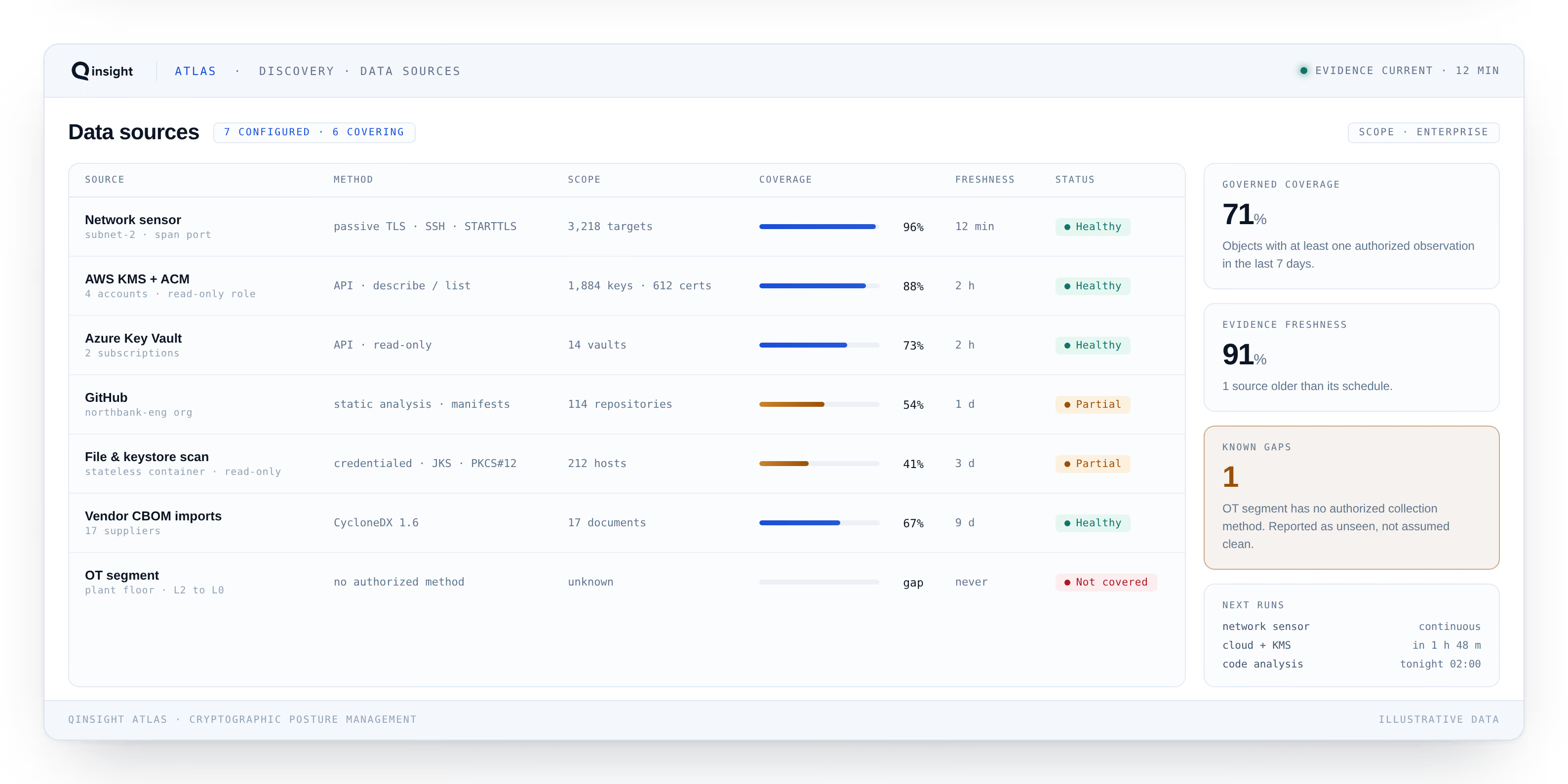
Coverage is a number you should be able to see
Illustrative coverage shows which discovery surfaces have been assessed and where authorized collection is still needed.
Known gap in this illustrative scope: the OT segment is not currently covered by an authorized collection method.
Match the collection method to the surface
A technical matrix buyers can use to evaluate fit and scope a pilot, including where confidence is lower and why.
Make every collection event defensible
A discovery run is more than a scan button. It is an authorized scope, a collection method, a set of observations and a reviewable record of what succeeded, failed or remained out of reach.
Authorize
Define environment, target boundaries, credentials and exclusions.
Collect
Run the appropriate connector, scanner or import for each surface.
Normalize
Map raw evidence to canonical objects without discarding source detail.
Resolve
Deduplicate, flag conflicts and connect observations to systems.
Review
Measure coverage, freshness, confidence and unresolved gaps.
Keep the "how do you know?" answer attached
Every record carries the collection method, the sensor, the timestamp and the confidence. Evidence that cannot be traced is not evidence.
Illustrative record. Example data.
No agents required
Network and cloud collection needs no software on target hosts. Filesystem scanning uses a stateless container with a read-only service account.
Least-privilege by default
Integrations request describe and list permissions. Never decrypt, never export.
Metadata only
Endpoints, certificate fields, protocol details and findings. Never private keys, never payloads.
Start with one business service and map it completely
A pilot that discovers ten thousand objects across an unclear scope proves less than one that fully maps a single business service. Three things make the difference.