
Post-quantum migration requires more than an algorithm swap
Deploying post-quantum cryptography does not ensure it is used. True readiness requires visibility into protocol negotiation, fallback paths, and actual cryptographic behavior.
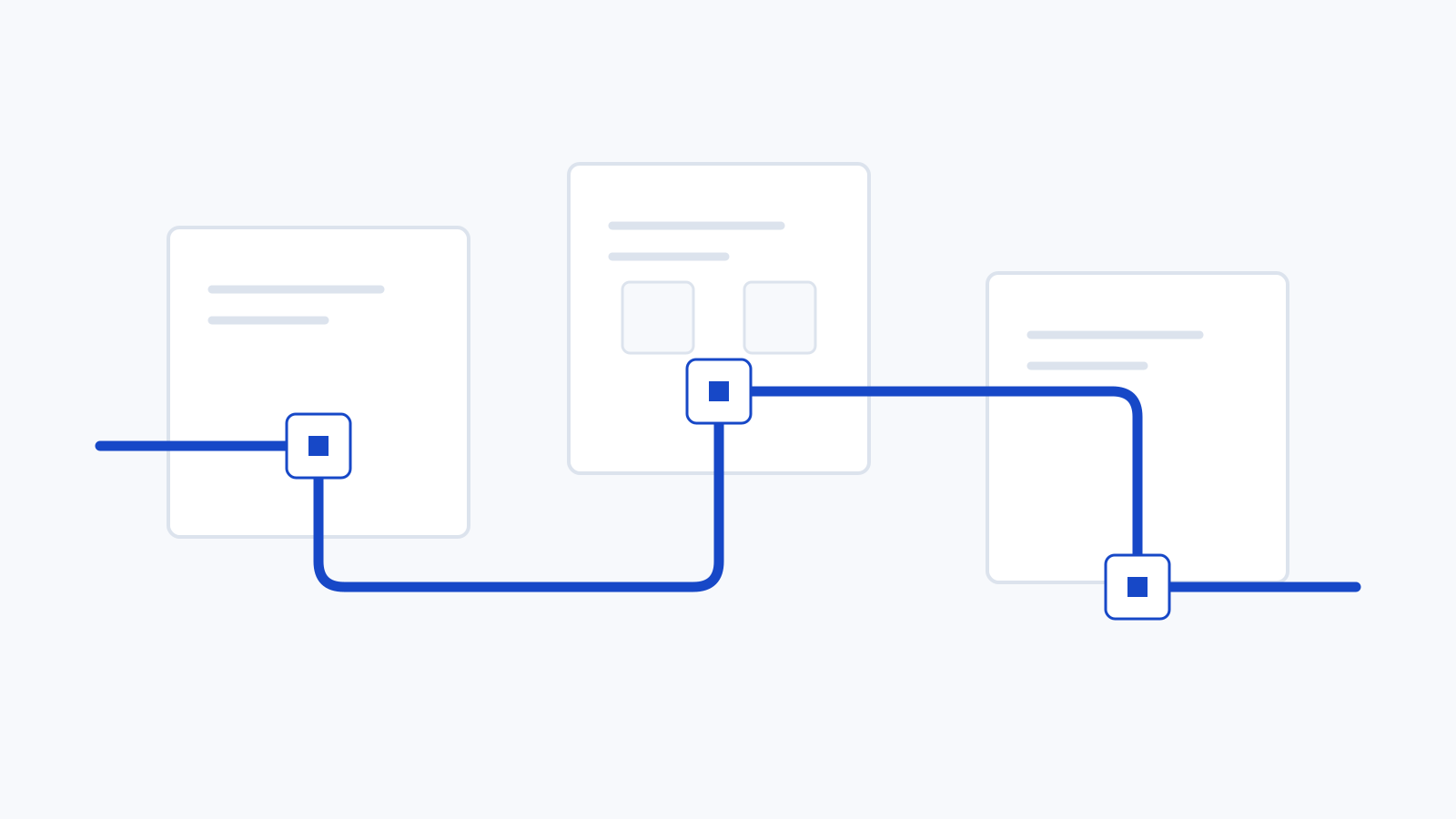
The organizational shift from post-quantum planning to post-quantum implementation places cryptographic discovery front and center. "Cryptographic discovery” is the process of identifying all algorithms in use, where they’re deployed, and which systems depend on them. While this work is essential, more must be done to achieve “readiness.” Deploying quantum-resistant cryptography and using quantum-resistant cryptography differ. Understanding the key differences is crucial for organizations to assess readiness and prioritize migration efforts.
Deployment vs. readiness: the critical distinction
| Evidence to check | What the example shows |
|---|---|
| Endpoint capability | A post-quantum option is available on one endpoint. |
| Negotiation | The peers select a mutually supported option. If the peer lacks post-quantum support, that option may be classical. |
| Session behavior | The established session uses classical cryptography in this example. |
| Readiness evidence | Verify the negotiated cryptography, alongside support and configuration. |
Illustrative TLS scenario: one endpoint supports a post-quantum option, but the connection uses a mutually supported classical option. Availability alone does not establish the cryptography used by a session.
For the ownership behind this distinction, see why PQC migration is still an enterprise responsibility.
ML-KEM (Module-Lattice-Based Key Encapsulation Mechanism) is a post-quantum cryptographic algorithm, developed to protect encrypted communications against future quantum-computing threats. Standardized by NIST in FIPS 203, ML-KEM uses lattice-based cryptography rather than traditional public-key approaches (e.g., RSA, elliptic curve cryptography). Because cracking lattice problems is more complex, lattice-based cryptography enhances security. Conversely, RSA and elliptic curve cryptography are vulnerable to cryptographically relevant quantum computers.
Current quantum-preparedness measures rely on identifying quantum-vulnerable algorithms and replacing them with NIST-standardized alternatives such as ML-KEM. However, cryptographic posture is often determined by protocol behavior rather than algorithm availability. A system may support quantum-resistant cryptography but still rely on quantum-vulnerable algorithms during actual communications. TLS is a useful example. As organizations start introducing quantum-resistant key exchange mechanisms into their environments, deployment may be considered the primary milestone. In practice, deployment is only one step. When two systems establish a TLS connection, they select a cryptographic method that both support. If one endpoint lacks support for a quantum-resistant option, the protocol may “negotiate” a traditional key exchange method instead. The result is an environment that appears quantum-ready but continues to establish sessions using quantum-vulnerable cryptography in production.
The visibility gap
The gap between “behavior” and “availability” creates a visibility problem that traditional cryptographic inventories are not always designed to solve. An inventory can identify where ML-KEM is deployed, just as it can identify certificates, keys, algorithms, and protocols across the landscape. How those components behave when systems communicate with one another may remain unknown. Understanding that distinction requires visibility into protocol configurations, negotiation paths, fallback mechanisms, and the conditions under which cryptographic decisions are made. The difference between capability and usage becomes increasingly important as organizations begin measuring progress against post-quantum migration goals.
Sector spotlight: financial services
For financial institutions, this issue is especially relevant because many critical systems exist within highly interconnected environments. Applications communicate with internal services, cloud platforms, payment networks, trading systems, partners, vendors, and customers. A quantum-resistant configuration in one part of the environment may have limited practical impact if interoperability requirements force communications to default to legacy algorithms elsewhere. In these situations, migration progress can be difficult to evaluate because deployment metrics alone do not accurately reflect operational reality.
This is one reason cryptographic inventories and Cryptographic Bills of Materials (CBOMs) are gaining importance. CBOMs are an integral component of a larger visibility strategy. A CBOM can identify where quantum-vulnerable cryptographic components exist within software, while an inventory can identify where those components have been deployed. On its own, neither a CBOM nor an inventory fully explains how systems negotiate and use cryptography. As organizations advance their PQC migration journeys, understanding cryptographic behavior will be as important as identifying cryptographic assets.
Dive deeper into the differences between CBOMs and Cryptographic Inventory: we break it down here.
The bottom line
The challenge is not unique to post-quantum cryptography, as security teams have long struggled with intended state vs. actual state. For example, policies may require one configuration while operational realities produce another; controls may be deployed but not consistently enforced. Cryptographic modernization mirrors this dilemma. The presence of a quantum-resistant algorithm does not necessarily mean quantum-resistant communications, just as the presence of a security control does not guarantee effective protection.
As post-quantum migration accelerates, organizations must look beyond deployment and determine how quantum-resistant cryptography is being used. Organizations that can answer both questions will be better positioned to evaluate their true exposure, measure meaningful progress, and make informed decisions about where to focus migration efforts next.
Next step: Check the connection, not only the installed algorithm. Start by mapping the components involved and the evidence you need from each. Review the five-stage migration framework.
Build the evidence behind the argument.
Start with one accredited boundary or one delivered system and produce evidence a reviewer will accept.