
Quantum.Tech World 2026: four signals that post-quantum migration has entered a new phase
Quantum.Tech World 2026 showed the conversation has shifted from PQC awareness to execution, with organizations prioritizing cryptographic visibility, governance, and crypto-agility.
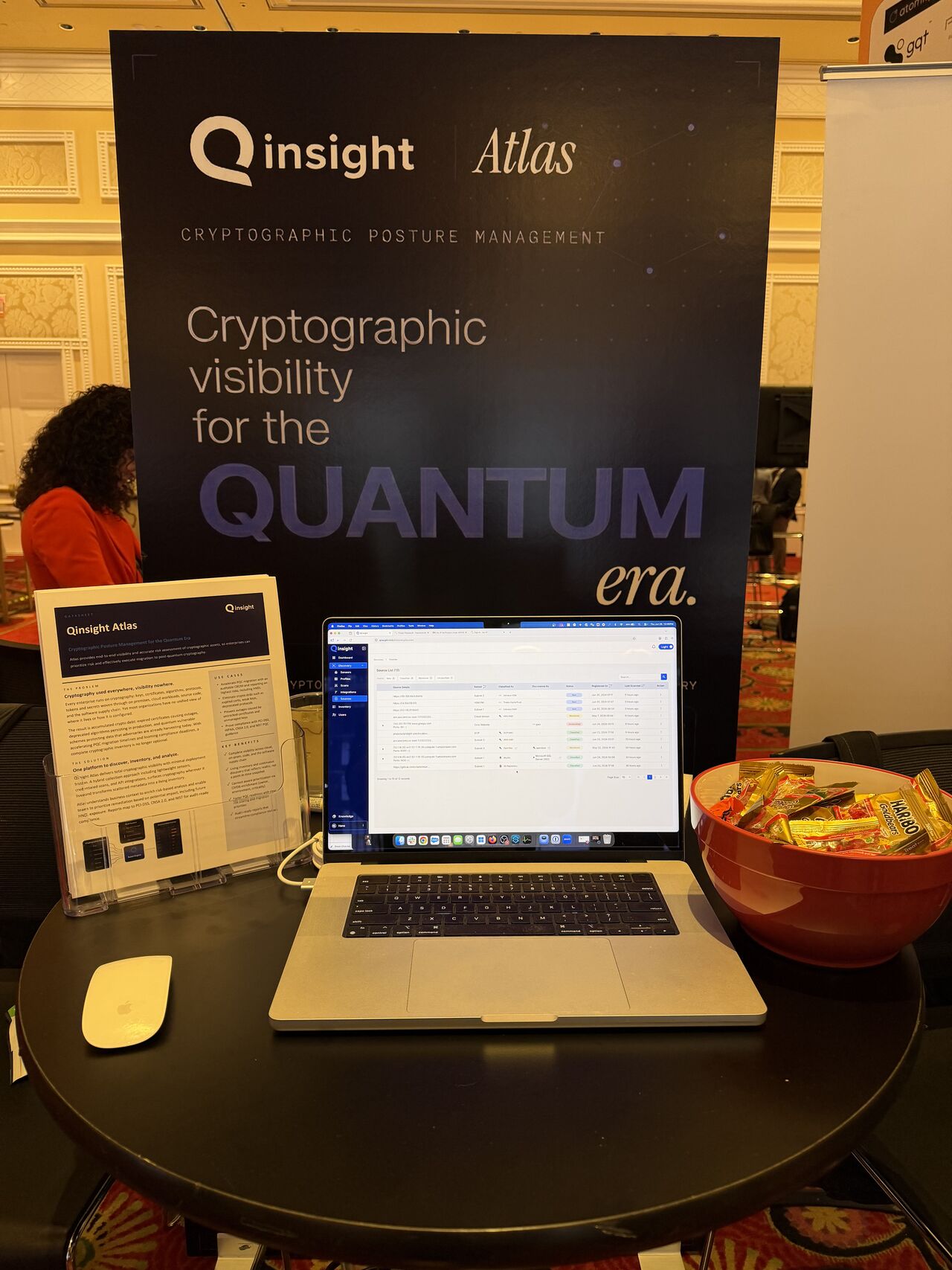
For the past several years, post-quantum cryptography (PQC) conversations have centered on preparation. Organizations discussed potential timelines, monitored NIST standardization efforts, and began building awareness around the long-term implications of quantum computing. At Quantum.Tech World 2026, the conversation felt different. Keynote sessions, panel discussions, and conversations on the show floor were less about preparation and more about plan execution. This year's conference underscored the shift from awareness to action.
Quantum.Tech World brought together more than 1,000 leaders from enterprise, government, research, and industry, including representatives from Fortune 1000 organizations, standards bodies, all 17 U.S. Department of Energy national laboratories, and a broad ecosystem of technology vendors.
We spoke with security and risk leaders from financial services, healthcare, and government who weren't debating whether quantum computing posed a risk. They were evaluating migration strategies, comparing tools and partnerships, and trying to understand how to roadmap post-quantum readiness. Enterprise representatives wanted to leave the conference with their understanding of the research translated into clear, tactical next steps.
1. From awareness to action
Not long ago, it seemed most organizations were still evaluating whether quantum computing represented a material enterprise concern. At this year's conference, discussions focused on migration planning, organizational readiness, governance, and execution. Security leaders were comparing their approaches to cryptographic discovery and brainstorming how to build necessary capacity for this multi-year transition.
It felt particularly timely that an Executive Order arrived on June 22, establishing new expectations for federal agencies and their supporting organizations. Throughout the event, vendors, consulting partners, and enterprise security teams referenced the orders as an accelerator rather than the reason organizations should start preparing.
2. Crypto-agility has become the end state
One theme cropped up repeatedly within security panels: organizations should not approach PQC migration as a one-off project, and crypto-agility was framed as the longer-term objective.
Cryptography is not static, and standards continue to evolve. New algorithms emerge, and existing algorithms may require updates. Organizations that plan for a one-time migration will likely face the same challenges when the next major cryptographic transition surfaces.
Rather than focusing exclusively on replacing algorithms, organizations are investing in the ability to understand their cryptographic posture, evaluate change, and update cryptographic implementations without introducing unnecessary operational risk. In that model, migration becomes one capability supported by broader investments in visibility, governance, automation, and inventory management.
This distinction matters because crypto-agility shapes the question organizations must ask. Rather than, “Can we complete a PQC migration?” organizations may be better off asking, “Can we efficiently adapt and respond to continual change?”
3. Visibility is table stakes
Another common conversation point: migration planning depends on visibility. One enterprise CISO described quantum readiness as a resilience challenge rather than a technology challenge. That perspective was echoed in other areas of the conference.
Several panel leaders described cryptographic discovery as the natural first step in any migration program. Before organizations can prioritize systems, estimate timelines, or evaluate risk, they need to understand where cryptography exists across the enterprise and how it is being used. This undertaking is often larger than expected.
Cryptographic assets extend across internally developed applications, commercial software, cloud services, APIs, certificates, keys, protocols, hardware security modules, and third-party platforms. They frequently span multiple business units, infrastructure teams, and technology owners. Without a complete view of those assets, organizations struggle to answer basic questions about migration scope or business impact.
4. Organizations are beginning to treat PQC as an enterprise program
As organizations build out their PQC transition roadmaps, they often recognize that essential stakeholders extend beyond cryptography specialists.
The conversations at Quantum.Tech World convened CISOs, enterprise architects, infrastructure leaders, governance teams, compliance organizations, and executive leadership. Like enterprise migration, cryptography touches nearly every technology domain, making coordination just as important as algorithm selection.
How organizations define progress is also shifting, as many SMEs must play a role in the transition.
Rather than measuring success by the number of systems that support a new algorithm, assessing readiness may depend on responses to several key questions:
Can we identify vulnerable cryptography?
Can we prioritize migration based on business impact?
Can we measure progress consistently?
Can we adapt as standards evolve?
These questions are rising to the top in enterprise PQC programs because they reflect the operational work required long before production systems begin switching algorithms.
Taking the conference into the real world
Every conference captures a moment in time, but Quantum.Tech World 2026 reflected something larger than individual announcements or product launches. It highlighted an industry that has moved into a new frontier of post-quantum preparation.
The discussion centered less on quantum computers themselves and more on operational disciplines required to manage cryptographic change. Attendees swapped information on discovery, inventory, governance, crypto-agility, and more.
This shift is significant. For years, the conversation focused on future risk. Now, that risk seems to be better understood and accepted not as an if but a when. Organizations are asking practical questions about how to approach and manage a deeply complex program and build a solution that can adapt over time.
Next step: Turn these observations into a scoped program with accountable owners, discovery priorities, and evidence for each stage. Use the five-stage migration framework.
Build the evidence behind the argument.
Start with one accredited boundary or one delivered system and produce evidence a reviewer will accept.